Friday, March 27, 2015

Adventures in Paradise Volume 2 # 23


Kia ora! Our excellent adventure continues with some thoughts about a birthday party and the lessons that I learned by attending. Many of you are aware that the members of Relief Society just celebrated its 173rd birthday. One hundred and seventy three years ago, twenty Mormon women met in the upper floor of a red brick store to form that organization. By the end of the meeting, they had a vision and a clear purpose: to save souls and to care for the poor and the needy. Today the Relief Society is one of the oldest and I believe, the largest women’s organizations in the world.

Every year, there are birthday celebrations in honor of the Relief Society and those celebrations are as varied and creative as the members themselves. I can recall some lovely dinners, delicious lunches and even a picnic or two. There have been musical presentations and art exhibits. Other observances have been service centered, where projects were completed for local homeless shelters. I can remember collecting books for a neighborhood school as well as packing hygene kits for people suffering in disaster-stricken areas. Once, I even recall a party where birthday cake was served to the women as they chatted over quilting frames. This year the news from my home ward in Salt Lake was that a delicious dinner was enjoyed with homemade birthday cakes providing the dessert. I was told that the decorations included white feather boas intertwined with tiny white lights. Having heard that, I suspect that my sweet friend, Ida, had a hand in those arrangements.

Our tiny branch of twelve women celebrated here as well. The Manutuke branch Relief Society president, Sister Faeanza Whaitiri*, who is creative and imaginative came up with an idea that set this year’s festivities apart from all of the rest. Faeanza has flare and is somewhat larger than life. She wears more jewelry at one time than I own in entirety. She always knows the thoughtful thing to say and her bear hugs are legendary. She lives with a unique zest for life and her personal style showed up again in her idea for our little get together. Her birthday party idea takes the cake. No pun intended!
 
This six-person canoe is called a Vaca. Our expert paddler spent fifteen minutes with us explaining the different strokes and demonstrating the proper paddle hold. She taught us how to sweep and draw. We learned how to turn the Vaca, how to make it stop and how to direct it backwards. We were instructed to keep our weight centered over the right side of the canoe and we were to paddle alternately, but in unison with the person directly in front of us. After what seemed like a very short lesson, we were deemed seaworthy (some of us had our doubts) and we were launched into the river. Our trial paddle took us down stream and when our instructor felt we were sufficiently practiced, she directed us up river and into the experience of a lifetime.

I am willing to admit that I was not all that keen on the paddling idea when I first heard of it. In fact, I will also admit to saying a little prayer, where in I asked for really bad weather so that we would not be able to go. I was afraid of looking foolish and even more afraid of looking wet and foolish. As it turned out, it was a beautiful fall day and the weather was perfect, especially considering the fact that cyclone Pam had arrived the previous Monday. The river was smooth as glass, and although we were warned that trees and boulders lurked beneath the surface, it all appeared perfectly calm to us. After our trial paddle, we turned our vaca around and headed up stream. We spent the next hour working and laughing together as we explored a part of the Gisborne landscape that I had never seen before. On occasion, another traveler would pass in a kayak and there was animated waving from the bank. Ducks and geese paddled along side us as we listened for our teacher to call cadence. Every ten counts, she would call, “hip” and we would raise our oars, change sides and begin rowing again in unison. We laughed and chatted and it was wonderful. I found myself shuddering to think that I had almost missed the experience due to being fearful. It was an idyllic day and I loved every minute of it. I was reminded of something I have said before. “Fear keeps us from doing.”

After docking the canoe, Faeanza, laid a tablecloth across the hood (bonnet) of her car and we were treated to a kai (lunch) of fresh fruit, crackers and cheese served on real dishes with not a paper plate or cup in sight. Without disparaging any of the other birthday celebrations, I was struck by the fact that this had been a unique opportunity for women from very diverse backgrounds to get to know each other better. This would not have occurred had we taken someone else’s suggestion to have lunch together in a noisy restaurant. It was the perfect day and the perfect celebration. Near the end of our time together, our coach announced that we were now ready for open water! Open water? I think that means the ocean!

Later, as I thought about all the things that I had learned last Saturday, I remembered Robert Fulgham, who years earlier had said that everything he needed to know for life he had learned in kindergarten. I found myself correlating my rowing experience in that same way. Much of what I learned while rowing can relate directly back to having a successful life.

  1. Listen to someone who has more experience and who knows more than you do.
  2. Be aware of hidden dangers
  3. Do your part
  4. Wear a life jacket, even if it does not make you look fabulous
  5. Don’t splash the person in front of you. Be thoughtful
  6. Still waters run deep
  7. Be prepared
  8. Pay Attention
  9. Many hands make light work
  10. Learn correct principles
  11. Don’t be afraid to try something new
  12. Pull together
  13. Embrace Change
  14. Keep learning
  15. Enjoy the journey
Mr. Fulgham also asked us to remember the Dick-and-Jane books where the first word you learned was the biggest word of all.   LOOK

As always, we are happy and trying to work hard. We have so enjoyed looking around our new home and learning from what we have seen. We have looked at your lives and have learned from them as well. Thank you for being good teachers and we would be happy to have any of you as rowing mates. By the way, should you be wondering if any mission rules were broken, I can assure you that they were not. Our mission president, has encouraged us to enjoy our new surroundings and learn from the unique culture here. He has strongly suggested that we become participants. He has also been very supportive when it comes to our having visitors from home. So, as usual, the Belliston Hotel is happy to welcome visitors should you like to inquire about a booking.

Love Ward and Susan    Elder and Sister Belliston, serving in Gisborne, New Zealand

* In Maori, “Wh” is an “F” sound. So Sister Whaitiri’s name is pronounced  Fi tee tee (the “r”s being another matter all together)
 
Our president, Faeanza decked out in matching necklace and bracelets. She had also had her nails done that morning for our special occasion!
 

Our caller is just entering the back of the vaca and that's me looking stunning in the yellow designer lifejacket.


Notice that our paddles are facing opposite sides of the canoe. We are preparing to launch.
 
 
"Hip" has just been called and we are changing rowing sides.


Paddling up a lazy river

Friday, March 20, 2015

Adventures in Paradise Volume 2 #22

Kia ora! Our excellent adventure continues with some thoughts on an unwelcome visitor and the difference between being blessed and being lucky.  This past week, the South Pacific area prepared for an unwanted guest. Cyclone Pam was ferociously bearing down on the islands in that vast ocean. While the mere mention of a cyclone is enough to cause panic, those who stood the greater chance of being affected by the high winds and rain, were the ones who prepared most diligently. It was fascinating to observe the varied levels of reaction and preparation.

We all heard late last week that a major tropical storm was heading our way. As is often the case, the storm trackers made first one announcement as to the possible path Pam might be taking, only to have that warning updated when the winds changed direction. It was first speculated that Fiji would be the most likely to take a direct hit. Almost immediately, our Fijian friends started posting their fears on Facebook and asking for our prayers. It was sometime later, as we were all nervously listening for updates that we first heard that the tiny nation of Vanuatu would more than likely be directly in the cyclone’s destructive path. Vanuatu is one of the poorest nations on earth and consists of a cluster of about eighty small islands, with a population of about 260,000 people.

Pacific Islanders started making their own version of preparations according to the level of warning that they received. Having heard that Gisborne should not expect the worst, but knowing that circumstances can change very suddenly, those of us on the east coast of New Zealand began thinking seriously about what should be done to protect ourselves. In our grocery stores there was a sense of excitement. Schools and businesses announced closures for Monday and Tuesday and a buying frenzy was taking place. The whole city had an almost carnival-like atmosphere surrounding the preparations. People were laughing and joking about where they would be and what they would be doing when Pam came to town. I will spare you the details and punch lines, but it seemed that no one was taking the warnings very seriously. It was curious to note that the market shelves were totally devoid of water, bread, beer and frozen pizza. 

Meanwhile on the islands of Vanuatu a very different and far more serious effort was being made in anticipation of Pam’s unwelcome arrival. As one of the strongest storms on record bore down on them, the residents buried food and fresh water. They took serious heed of the warnings. They sought refuge in a church or school when that was possible. Many even hid in the kilns used for drying coconuts as winds as high as 180 mph tore through their flimsy houses.

For almost twenty four hours, the villagers of Vanuatu tried valiantly to protect themselves and their loved ones from injury and loss of life. Two days after the storm had passed, a helicopter flew over a costal village and reported total devastation with no signs of life. When visited one day later, dozens of villagers were back rebuilding with what meager materials they could find and reporting only one injury. An aide worker was quoted as saying, “ Everyone is just getting on with it. It’s what they do.” 

Gisborne,  narrowly escaping the devastating drama was experiencing the storm, which was situated off shore, in an entirely different way. We too had twenty-four hours of strong winds and rain, but many of us were curious as to what changes would actually occur as a result of the storm. We were so intrigued by the mention of thirty-foot swells, that instead of staying home where it was warm and dry, we ventured out to the beaches to watch the changes in the ocean. Where in the days preceding the storm, there was a sense of excitement, that excitement had been replaced by a sense of awe and greater respect for the forces of Mother Nature. Suddenly the unreal and unlikely became vividly real and menacing. The sea was frightening and turbulent and I for one, found myself praying that there was no one battling those elements on a ship. It was a powerful experience and humbling. It was while gazing across a roiling ocean that I began to appreciate, from my limited perspective, that a group of people somewhere out there were cold and wet and frightened.

 By Tuesday afternoon, Gisborne was almost back to normal. The wind was still blowing, but not as hard and there were only intermittent rain showers. The storm had passed and all was well. I have, however, been mulling over a comment that I overheard concerning how blessed New Zealand was to have missed the carnage. Blessed? Personally, I feel that we often over use the word blessed. I am uncomfortable with the idea that New Zealand was blessed, while Vanuatu was not. How can I feel that I was blessed because the storm missed us all the while knowing that there are others who are suffering ? What is the opposite of blessed? Why in the randomness of a cyclone would one nation be blessed and not another? I find myself believing that New Zealand, in this case simply got lucky and Vanuatu not so much. But I would say that those simple villagers were blessed with the positive attitudes to have the faith to help each other start all over again. Their willingness to work together isn’t luck, it truly is a blessing.

As always, we are happy and trying to work hard. We have gained a healthy respect for weather forces far beyond our control. We are reminded what it’s like to feel so insignificant in the face of such power. We are grateful on the other hand, that we do not feel insignificant in our relationships with you and want you to know that you are not insignificant to us either. We truly are blessed to have you in our lives and hope that we will be lucky enough to have you all right where you should be when we return!

Love, Ward and Susan    Elder and Sister Belliston, serving in Gisborne, New Zealand
 

Ward, the intrepid storm tracker, faces the elements at Wainui Beach
 

It was sobering to see a usually calm beach in great turmoil
 
 
The ocean looks like it has been beaten with a giant mixer. Reports of 9-metre swells were not uncommon. These waves broke quite a distance from shore and measured around 6 metres.
 

If you look closely, you may be able to see the outline of mountains that nestle Gisborne. This photo was taken mid-day on Monday during the height of the storm
 
 
Two days later, you can clearly see Gisborne . Although much calmer, there are still more white caps than usual.
 
 
This photo was taken yesterday, five days after the storm. If you compare this shot with the one directly before it, you can clearly see the difference in the ocean. It is only the beginning of cyclone season, so wish us luck!!


Friday, March 13, 2015

Adventures in Paradise Volume 2 #21

Kia ora everyone! Our excellent adventure adopts a somber note as news of a tragic accident  has reached us here in Gisborne. It was while I was preparing this week’s blog for publication that we first heard of the horrific crash that had taken the lives of three vacationers from Richfield, Utah. In the ensuing days, as the story’s details have filtered through to us, I felt impressed to put my original, much more frivolous blog on hold so that I could address the serious and yet touching nature of the events of the past week.

Just for a moment let me put things into perspective in terms of the accident scene. The Hamilton Temple, the Visitor’s Center and our mission presidents home are all located within a few hundred yards of each other on the state highway where the accident occurred. The surrounding area is pastureland made up of rolling hills. This highway, like so many others in New Zealand is a narrow, two-lane road, which is heavily traveled. Seeing semi-trucks and logging vehicles is not at all uncommon any time of the day or night, and as I have mentioned in previous blogs, those trucks move very quickly.
 
No one knows for certain why, but it is clear that the SUV, driven by Richard Barnett made a right turn into the path of an oncoming semi. Those of us, who are visitors to this beautiful country, are well aware of how vigilant one must be to remember that we are to be driving on the left side of the road. I can tell you from personal experience, that although I know intellectually, every move the driver makes is the exact opposite as the same maneuver that we would make at home, still in the micro second that it takes to execute a turn, all logic leaves as that turn seems totally wrong. It is confusing and frightening at the same time.
 
As it so often happens, when word of a tragedy first surfaces, it surfaces with much erroneous information. Well meaning, caring people pass the story along to others, and in the retelling, fiction replaces fact. The events in this case, became so skewed that young missionaries in the Hamilton mission, having heard from church members, that two senior couples were killed in that accident, frantically began calling each other to find out who had been involved. They finally dared to call the phones of the senior couples Friday afternoon in the hope that those phones would all be answered! Their concern for us was touching and became one of the few bright spots in what was otherwise, a very sad week.
 
We also have all been so touched by the behavior of Richard Barnett, who was released from the hospital this morning. This man, facing the loss of his wife and two dear friends, due to a simple mistake, is also facing charges laid by the Hamilton Police. While the weight of his involvement in this tragedy is resting upon his shoulders along with the onset of his personal grief, Richard Barnett, attempted to seek out the driver of the semi to offer any comfort that he could. Who does that? What sort of person finds the strength to reach out to another, when in reality, others should be reaching out to him?
 
 In this battered, grieving man, we have a perfect example of Christ-like behavior. We don’t have to listen to anything Richard Barnett says, because his actions towards others say it all.  In his loss, he still finds it important to reach out to someone else. While it is true, that at this time, the driver of the semi has chosen to decline the offer of a meeeting, it does not diminish the fact that the gesture was made. I was thinking today, that I wish that I had had the opportunity to meet Richard Barnett, but then it occurred to me that due to his actions, I already know him. Our prayers go out to the Barnett and Peterson families and we wish them well in the coming days as their loved ones arrive home to a very somber welcome. Our hearts are with them as well
 
In closing, it must be said that there have been many thoughtful people who have and are still supporting all those involved. The local stake president and bishop have been at the hospital almost continuously since Tuesday evening. The community has come together to offer any support that they can. There have been offers of meals and lodging for family members who are arriving from Utah. There, I am certain, will be many more quiet acts of kindness that will go undocumented and that’s the way it should be.  
 
As always, we are happy and trying to work hard. We have been saddened and touched by the events of this past week. But we have also been taught lessons in compassion. We too, in a very small way, have been the recipients of the concern of several young missionaries who worried that we might have been involved and were relieved to know that we were safe. We are grateful to have loving, caring and thoughtful people in our lives. We hope that we can return the favor when ever you should need us.

Love, Ward and Susan     Elder and Sister Belliston, serving in Gisborne, New Zealand

Saturday, March 7, 2015

Adventures in Paradise Volume 2 #20


Kia ora! Our excellent adventure continues with some thoughts on the benefits of planning ahead. There is a familiar saying that states, “If you fail to plan, then you plan to fail.”  It may seem strange that I would think about that phrase almost every time we see a logging truck, but it’s the truth. That truth becomes the focus of this week’s blog.

As Ward and I were first motoring our way towards Gisborne last November, we began to notice something very curious about the surrounding pine-covered hills. We observed to our amazement, that the pine trees seemed to be growing in well-organized groups. The trees in those groups were all about the same size and from a distance it seemed that someone had purposely created a living patchwork quilt with clean and tidy edges. We also began noticing whole hillsides dotted with tiny pine trees. Those minute specks on distant slopes contrasted with the lush green quilts blanketing the hillsides and reminded me of those primitive paintings that we associate with Grandma Moses. The whole sight had a magical, slightly unreal feel to it. Did someone plan it that way, we wondered?

We now know that indeed, those definitive clumps of trees are well planned. Their placement is part of a master plan that makes forestry one of the largest industries in the country. It is a master plan that looks far beyond the immediate needs of the community. It is remarkable to note that the basis for the success of that master plan is that every single day plans are focused thirty years into the future! The ramifications of the principle of advance planning is far reaching. The lumber that is produced here is exported to many countries, including China and Japan. They order specific sized logs and every day huge cargo ships sail into port and dock workers load those logs onto the ships. When those same ships return again to Gisborne, there are more logs waitng. Countries that need building materials benefit, and the local labor force is never out of work.

Each day, mature trees are harvested and loaded onto the huge trucks that clog the narrow roads in our part of the country. Those logging trucks often make as many as four trips a day from the work sites in the mountains  to the dock. The felling and loading of those trees provide continuous work for men who are willing to work long hours in often dangerous circumstances. Long before the trees are mature, other crews, armed with chain saws, spend entire work days, sawing off lower limbs of those pines so that there will be no knot holes to mar the wood. Due to the advance planning of the forestry office, these men will always have a job, as long as they are willing to work hard. After the trees are felled, the ground is made ready for another planting. This time trucks loaded with thousands of seedlings arrive on site and their contents are portioned out to yet another group of laborers. If you can imagine spending an entire day planting trees in straight rows while always working on an incline, stretch your imagination to include the fact that you are expected to plant at least one thousand of these saplings every work day shift!

Part of the thirty-year plan also includes concern for the aestetics of the area. There are never two adjoining parcels of land harvested at the same time. This allows for continuous beautiful views anywhere one looks. There are never mountainsides that are decimated, so the lack of watershed is not a worry. It’s amazing to contemplate how all the pieces of this puzzle fit together. It is equally daunting to imagine what it would be like if the forestry department did not look ahead and plan for the future. What would the locals face if the future were not considered in the present? Many of the men working today will not see the results of the advance planning. Those working a shift today may not, for any number of reasons, be available to view the results of their toil in thirty years. Yet, they do what they do, knowing that they are literally sowing seeds for the future, even if that future belongs to someone else. They are proud to play a role in that legacy.

So, almost every time that we pass one of those log-laden trucks, or even more frighteningly, when they pass us, I experience the same fleeting thought. What am I doing or what have I done by way of planting seeds for the future? Whether I realized it or not at the time, decisions that I made thirty years ago are the building blocks that I am now using as my foundation. Sometimes that foundation needs a little shoring up due to the fact that I didn’t make all of the best decisions when I was younger. But I learned. I am learning still.  I did my best to be a good mother to two little boys and now my thirty year plan if you will, is evidenced in the kind of men they have become. I love them and am proud of them. So now, the question is, what is my plan for the next thirty years?  I am fully aware, that like many of the forestry workers I see every day, the seeds that I plant now may grow into someone else’s harvest.  Should I be concerned? Should I continue to have a plan? Should you?

As always, we are happy and trying to work hard. We thank you for the seeds that you  planted which have grown into blessings for us. We have made life-long friendships, enjoyed family relationships, learned valuable lessons, and have been the beneficiaries of  many seeds of kindness and thoughtfulness that have been sown over the years. Having a plan is planning not to fail.

 
Love, Ward and Susan    Elder and Sister Belliston, serving in Gisborne, New Zealand

P.S. As promised, there is an addendum to last week’s blog. William Paxman’s son, James Walter Paxman, built the home in Nephi where Ward’s family later moved. It is a very small world!

Also we are pleased to share that we had our first baptism last Sunday morning and have another scheduled for March 28.


This was our first view of a "patchwork" forest. We were curious and fascinated at the same time.


"Patchwork" forest is set off by vineyards in the foreground. 
 

It seems that the forestry department may have one or two artists on staff as this scene is eye candy!
 

I also smile when passing this forest as it reminds me of a bad haircut.
 

This hillside is covered with a forest of two-year old trees. Can you even imagine what it must be like for an individual worker to plant one thousand in one shift?
 
 
These trucks are lined up at the dock, waiting to be unloaded. Notice that each truck has two trailers.


Each order of logs is numbered and color-coded so that each is loaded onto the correct ship.
 
 
The empty truck parks under a giant hook. This hook hoists the second trailer onto the first, which allows the vehicle to maneuver more easily on the winding roads as it returns to the logging site for another load.


Friday, February 27, 2015

Adventures in Paradise Volume 2 #19


Kia ora everone! Our excellent adventure continues with another perspective on the two lines that I cited last week.
 
“We drink from wells that others have dug
  We warm ourselves by fires that others have kindled.”

With tender regard and gratitude for those who have gone before, I would like to share a touching tale of faith, perseverance and sacrifice. For us, this story started when Ward discovered a tiny grave in a secluded country cemetery in the village of Matutuke, New Zealand. This little grave is tucked into a corner, surrounded by Maori headstones and is protected by a two-foot high picket fence. The white paint on the fence is faded and peeling, but the etching on the marker is still legible.

To the Memory
Of
Sarah Jane
Beloved Daughter
Of Wm and K.L. Paxman
Born Sept. 17, 1885
Died March 10, 1887

That simple marker started a two-month quest for Ward that has reaped amazing and touching results .The mystery of who that child was and how she came to be buried among generations of Maoris has become almost an obsession for Ward and we wanted to share the story with you. There is a bit of a surprise ending, so we hope that you will keep reading until the very last sentence.

William Paxman president of the Juab stake in Nephi, Utah was called to serve as a mission president in the late 1800’s. His assignment was to preside over the New Zealand mission and he was to serve for a period of at least three years. Fifty-one year old William was accompanied by his twenty-four year old wife, Katherine Ann Love Paxman, and their six month old daughter, Sarah Jane. One can only imagine and hopefully, appreciate what an arduous journey it must have been for this family. We have no way of knowing exactly how long the voyage was, but we can fathom the primitive conditions they endured, especially while traveling with an infant.

We only assume that the actual headquarters of the mission at that time may have been in Auckland, but we do know that in March of 1887, President Paxman, his wife, Katharine and now eighteen-month old Sarah Jane were in the Matutuke area for some sort of church gathering,. From the papers that Ward has located, it appears that it was a mission conference. Again, we do not know the particulars, but today the drive between Auckland and Matutuke is over seven hours, so we can safely conclude that travel time in 1887 would be equated in days, not hours!  An announcement at that conference would prove to be groundbreaking.
We know that this mission conference opened March 12, 1887. Noting that date, it becomes sadly obvious that two days before that event, little Sarah Jane passed away. We have no information as to the cause of her death, but we can only imagine the grief that two loving parents must have been experiencing. In her hand-written notes, Katherine describes the meetings but does not discuss the death of her child.  Katherine’s narrative speaks of the meeting agenda, including the assigning of missionaries to their districts. She mentions by name some of those in attendance, but there is not a mention of her baby. One must assume that Sarah was buried so far from Auckland because there was no way to return her body in a timely fashion, especially considering that March is considered the end of summer and the heat would have been a factor. I am imagining even as I relate this story, how this young mother must have felt in her loss.
Katherine goes on to write of the history making announcement that was made at that conference. She states that young Elders Richards and Saunders had been assigned to begin the first translation of the Book of Mormon into Maori. While many members of the LDS church believe that Matthew Cowley was the first to translate the Book of Mormon into Maori, we now know that this early translation predates Matthew Cowley by almost 32 years! We also know that this first translation took place in a little village near present day Gisborne where we are currently serving.

My heart is full as I relate what twenty-five year old Katherine wrote only two days after the death of her baby girl. She states that she has been appointed to cook for the translators and has been asked when ever possible, to act as scribe as well. Quoting now directly from her writings, we read , “ I was appointed to go and cook for them and help what I could by recording as they translated; so that my labors will begin shortly and I will be thankful to have something to occupy my time and attention.”  From a mother’s point of reference, Katherine is saying that her heart is breaking. But even then she finds something to be thankful for. She sees the long hours of cooking and acting as a scribe to be a blessing. What a remarkable attitude that is!

There are varying accounts of just how many Books of Mormon were available from that first translation. We have heard that there were between five hundred to two thousand copies made available to the members on the north island, due to the dedication of those two elders and one grieving mother. Their efforts blessed the lives of many people living in the area where we now serve. Their work and sacrifice are remembered and appreciated.

So, we only assume that William returned to Auckland. We do know, however that he continued to serve as mission president for another two years. Again, as a mother, I cannot imagine what Katherine must have felt as she left that little grave behind as she traveled back to the mission home. I also cannot imagine what emotions Katherine must have experienced when she left the country and returned to Utah, leaving her baby in a land so far away from home. I am overwhelmed by the strength William and Katherine and so many like them have exhibited as they worked to serve our Heavenly Father by serving a few of His children.

One hundred years later, as a show of gratitude and respect, the people of Matutuke erected a white picket fence around Sarah’s grave and to this day, that little plot is maintained by people who appreciate the efforts of those who went before. It is a very sweet gesture and not unexpected as we work with and get to know the hearts of the people living in that little village on the north island of New Zealand.

As Ward began researching this story, the Paxman name rang a familiar bell to him. There are many Paxmans who still live in and around Nephi. There was a Paxman family who lived in the house in Nephi where Ward’s family eventually resided. Even as I write, Ward is checking his facts and hopes that his connection to this story will involve a link to a common home. He asked me to wait to publish this blog until he knew for certain, but I was anxious to tell this story and will be happy to include his discovery as an addendum in a later blog.

As always, we are happy and trying to work hard. We continue to be touched by the sacrifices of others. We are deeply grateful to all those who have given so much in the service of others. King Benjamin reminds us that when we are in the service of our fellow beings, we are only in the service of our God. We appreciate you and the examples of service and sacrifice that you have been in our lives as well. We would not be the same without you.

Love, Ward and Susan    Elder and Sister Belliston, serving in Gisborne, New Zealand
 
 
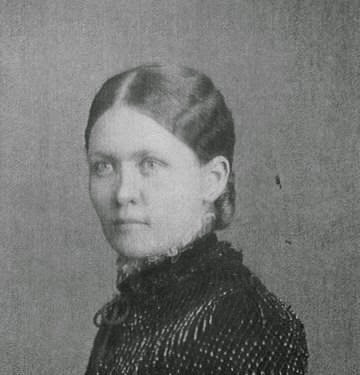
Sarah Jane's mother, Katherine Ann Love Paxman
 

The little grave in Manutuke


In Loving Memory of Sarah Jane

Friday, February 20, 2015

Adventures in Paradise Volume 2 #18


Kia ora! Our excellent adventure continues with some thoughts centered on those who have come before us.  Earlier this week, someone shared a message that I have not forgotten. In fact, I have spent the better part of my free time considering the ramifications of two very insightful little lines.

“We drink from a well others have dug
We warm ourselves by a fire that others have kindled.”

All week I have been pondering on that short reminder. We, who have so much, should be so grateful for those who made it all possible. Naturally, I first thought of my own parents and how they sacrificed to give our family a good life. My father worked two jobs to support us and my mother used great creativity while making do with less. I love them and I miss then. They kindled the fires in our family and I am beyond grateful.

My grandparents lived through a depression and taught us all through example how to be frugal and careful with money and resources. My Grandpa Martin, while out of work in the 1940’s, put on a suit and tie every day and went down to his basement “office”. There he spent an entire work day writing resumes, making phone calls and sending out letters of introduction in hopes of finding a job. His job for that period of time was to find a job. It was that simple. Every day he dressed up as if he were going off to the office, although his reality was only the basement. I have been so impressed by his dedication to do whatever needed to be done in order to support his family. There isn’t a day when I am home (living in the home he built) that upon entering that basement room, I do not have a mental image of him sitting at his desk working at finding work. He kindled the fire of determination and hard work in his descendents and we are grateful.

My great grandma Martin was a seamstress. By the time she was fifteen, she no longer lived at home. She would be hired to spend a period of three to four months living with strangers while fashioning all of the clothing for the women in the family. Having completed that task, she would then move on to the next house full of strangers and begin all over again. I have often thought of what a hardship that must have been for her, but she did it. And she continued that work until she was married. I learned to sew on my great grandma Matins treadle sewing machine. Her early encouragement turned into a life long vocation and avocation for me. When she died at 96, she left me her treadle sewing machine. Others thought it an odd bequest for a sixteen-year-old, but I was thrilled. I still have that machine, and although I have upgraded a tad, where I go, that old Singer goes as well. My great grandmother kindled my creative fire and I am grateful.

My great, great grandfather James Peacock was born in Nauvoo and traveled across the plains as a small child. Most of us are aware of the hardships those early saints faced as they made their trek westward. It was hot, it was cold, it was dusty, it was wet, it was snowy, and it was often miserable, but they did it. I cherish the little hat that young James wore on that journey and can’t help but think of the young mother who made certain that he wore it every day to protect his baby face from the sun. James grew up in the Salt Lake Valley, on the Avenues near City Creek Canyon. Thinking of wells that others had dug made me smile as James Peacock became a member of the very first fire department in the valley. That firehouse still stands in City Creek Canyon, and should you like to have a look at my great, great granddad, please go to the DUP museum at the top of State Street. After wandering through the endless fascinating pioneer exhibits, find your way back to the room dedicated to the first fire department. There you will see his uniform, his hat and his photo. He is the handsome man in the white moustash, who bears a very strong resemblance to Teddy Roosevelt! Although not technically drinking from a well that he dug, many early residents were grateful for the water he supplied as fires were fought and homes were saved. The water he shared was life saving and we are grateful and proud as well for his service.

If I am to be truthful, and I always try to be, this blog started out to be something very different from the one you are reading. Last month, we discovered a tiny little grave in a remote cemetery out in the country. Two-year old Sarah Jane Paxman is buried in that grave, which is protected by a little white picket fence. It was her story that I was going to share when speaking of those who have gone before. It is the story of sacrifice and it seemed to fit perfectly with the two lines that I quoted at the beginning of this blog. Somehow, as it often does, my blog took on a life of its own and the result was an homage to a few of my family members. Offering no apologies for my moving off course, I will give my readers the opportunity to do a little research before my next blog. Look up the name Sarah Jane Paxman and see what you find……………..

As always, we are happy and trying to work hard. We are profoundly grateful for those who have dug our wells and kindled our fires. We hope that were they here, they would not be disappointed with the results of their labors as it relates to the lives that we choose to live. We appreciate also, the examples that you have set for us and the many ways that you have enhanced our lives by being the people that you are. You have nourished us and kept us warm in more ways that we can name. Thank you!

Love, Ward and Susan    Elder and Sister Belliston, serving in Gisborne, New Zealand
 
After finishing this blog, it occurred to me that we had no family photos with us here in New Zealand. We are grateful that Wards daughter, Teresa sent us a beautiful calendar for Christmas. This photo of our home was on the last page. For thirty-two years I have been grateful for the opportunity to live in the home my grandparents built. It has served as a connector between me and those who went before. My mothers bedroom is behind that window partially obscured by the tree. My grandparents planned and saved a very long time to be able to build this house. I am grateful. Ward, I believe is equally indebted to Henry Ford!

Friday, February 13, 2015

Adventures in Paradise Volume 2 #17


Kia ora, our excellent adventure continues with some thoughts on what we see and what we wish not to see. We have new friends here who face challenges far beyond what most of us will ever experience. Both Samantha and Jason are blind. Jason was born blind and Samantha lost her sight as a child due a sudden infection. This couple has two beautiful dark-eyed children and my first thought on meeting Samantha was that it was such a shame that she will never see the sweet faces of her two little boys.

As we became better acquainted, I welcomed the opportunity to learn more about how Samantha goes about her life. We were invited to dinner and I will admit to a certain amount of trepidation concerning how she navigated in her kitchen. It turns out that she is a master at making a roast beef dinner and her homemade bread is delicious. But my curiosity was more directed towards the question of how she accomplishes many of the tasks associated with parenting. When I asked her how she could discern whether her baby’s bottom was clean after a nappie change, she simply smiled and answered, “it’s instinct”.  Sensing that I was about to ask other probing questions about child care, she smiled again and gave me the same answer. Being blind does not blind her to the fact that her child needs attention, it simply means that she can detect that need more instinctively that most. In an interesting juxtaposition, her three-year old instinctively knows that he needs to stay close to his mother and is not prone to wander off as most toddlers would be tempted to do.

Once, when we were having a little chat, Samantha said something that I have been pondering ever since. She told me that in many ways, she felt sorry for all sighted people because they are forced to see things that are ugly. She expressed gratitude that she would never see physical suffering. She would never see people mistreating one another and although she might know or hear of the atrocities of war, she would never view photos or news items of any of those conflicts. There would never be any mental image of the cruelty involved etched indelibly in her mind. She said that she is not the least bit unhappy about not being able to view television programs or movies, with their questionable content.  And she is pleased that she will not be confronted with views of graffiti, or slums. As fascinated as I was with her stance, I wondered aloud to her about the fact that she would never see the faces of her children. Would being able to see them, be worth seeing all of the worlds’ ugliness?

While Samantha prefers things the way they are, I have been considering what those of us who can see should do about the view. If we see suffering, do we try to do something to alleviate it? Are we concerned enough to try to make things better. Should we speak up when we see injustice? Unlike Samantha, who has no choice, we do have the option of seeing or not. Who we are, I think in large part, depends on what we choose to see.

Since I have started wearing contacts, I have been grateful every morning for the miracle of seeing well. In that moment where fuzziness is replaced by clarity, I marvel about the blessing of being able to see. I am so grateful for the little unexpected moments every day where something I see makes me smile. While I am sympathetic to Samantha’s viewpoint, I find the world far more beautiful than perhaps she thinks it is. And just possibly because we can see the ugly, seeing it may give us the opportunity of making some things just a little less unattractive. I am grateful for a Creator who has given me an endless supply of reasons to smile.

As always, we are happy and trying to work hard. We see that so many of you look for ways to make our world a little more beautiful and we thank you for all the times that you have made us smile. Our photos this week have no particular theme, save it be that they have all brought smiles to our faces. Our world here is beautiful and we would like to share it with you. Please enjoy

 
Love, Ward and Susan    Elder and Sister Belliston, serving in Gisborne, New Zealand
 

Gathering this bouquet from my own yard makes me smile!
 
 
A simple "sheep parade" makes us smile. 
 

We smile when we see a bountiful tomato harvest.
 
 
Seeing two small boys on a huge horse made us smile. I love seeing their little feet hanging down.
 

Our young friends smiled when they thought Ward was sleeping as they styled his hair.
 
 
I am smiling because I married a very patient man.
 
 
We all smiled when we visited Rere Falls for the first time last month.
 
 
It makes me smile to see ten little toes in our tree.
 
 
I smiled that I didn't get car sick on this mountain road! We take this road at least once a week!


We smiled quietly as we entered Grays Bush, an ancient forest. It was lovely and serene.