Friday, June 26, 2015

Adventures in Paradise Volume 2 #33

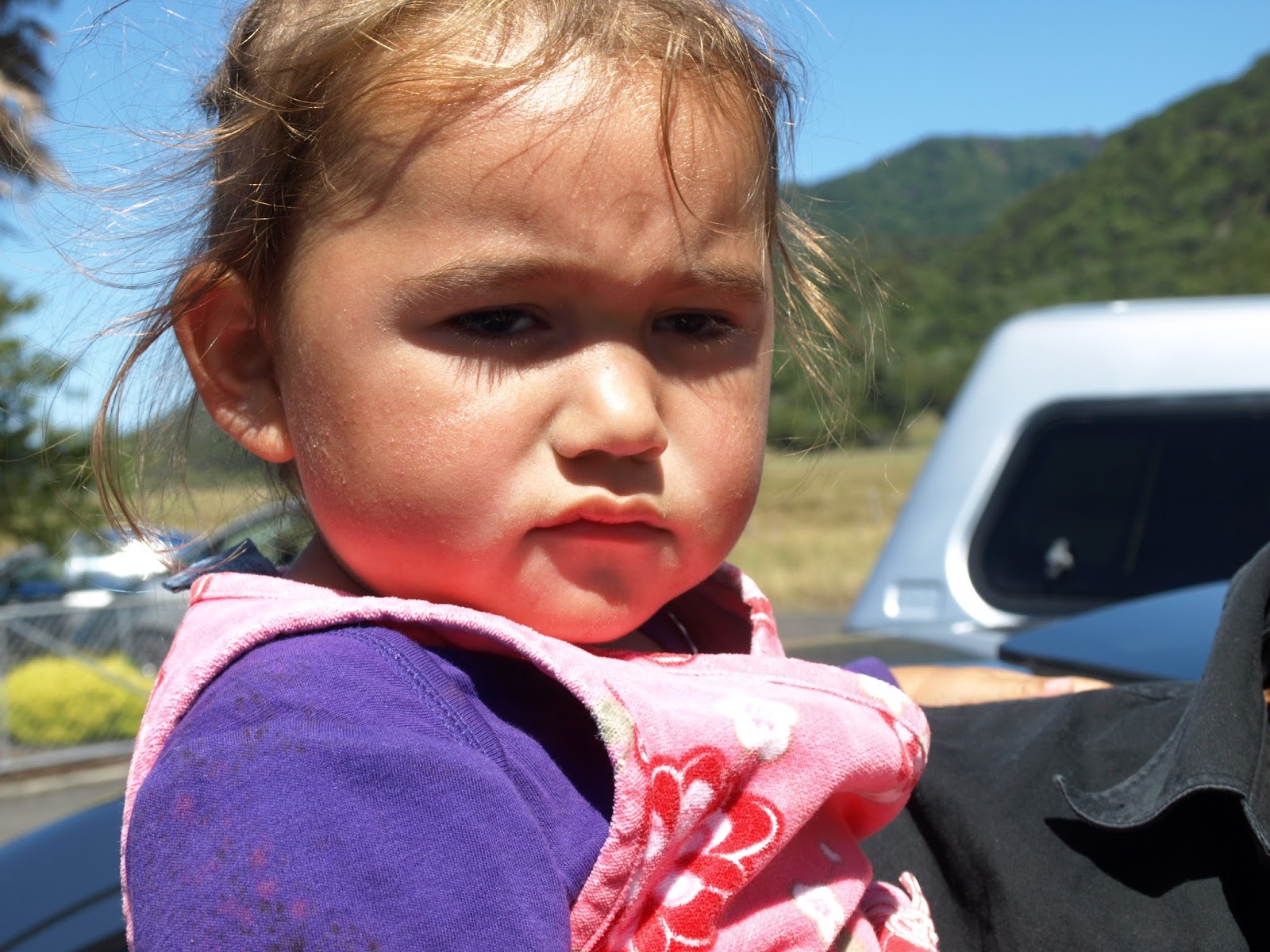
Kia ora! Our excellent adventure continues with a departure from the norm.  Usually, I would create our blog, hoping that my words would possibly strike some sort of responsive cord in the reader. We would add a few photos to aid in your visualization and then I would close by expressing my gratitude that all of you are part of our lives. As I viewed the myriad of images that I wished to include this week, I realized that very little text was needed as the children spoke for themselves. So, by way of a simple tutorial, may I just explain that the body of these photos were taken at an area gathering located in the tiny village of Te Araroa. It was a Sunday morning and the special conference afforded the opportunity for a reunion. Tents were erected, as the tiny chapel could not possibly accommodate so many visitors. It was a beautiful day and the joy was palpable as old friends greeted each other. I have often said, or rather warned, that when we finally leave this island, there will be one less child in residence. That one child will be tucked away in my suitcase as I return home with the sweetest of souvenirs. Perhaps, as you pour over the faces of these charming children, you may want to imagine which one of them you would tuck away in your luggage if you were given the chance to spirit one of them away with you. 

May I just mention, also, that most of these children are considered to be full-blooded Maori, although eye and hair color may surprise you. Many have an European ancestor or two tucked away in the family tree and that relative has added to the gene pool in lovely and exotic ways. 


This is Kahu. We were privileged to teach him before he was baptized.


This is Andres. It was cold and Andres came to our home for FHE "rugged up" to keep warm. He is wearing flannel pajamas, socks, and a hooded bathrobe. It is not at all unusual for sleepwear here to have a hood, so that one's head can be kept warm while sleeping. 


This is the Whanga family. Young John was our first baptism and we have grown to love this little group. Notice that of the three sisters in the front row, one is blond. In attempting to pronounce the family name, you might be interested to know that in Maori, the "wh" sounds like an "F". Also on a touching note, the baby was named "Halo" and she is a little angel! 


This is couple is blind. They know that their boys are beautiful, without ever having seen their little faces. 

Perhaps you may have picked out the child who has most captured your attention. As for me, I can say that while I have threatened to bring one of them home with me, I can assure all parents that their children are safe from kidnapping as Sister Belliston would not be able to choose one over another.

As usual, we are happy and trying to work hard. We have learned to love the people here, especially the little ones, and we hope that you have enjoyed to opportunity of looking into their faces. We can tell you, also, that we have missed the opportunity of looking at your faces and hope that you have realized just how much you are missed.

Love, Ward and Susan     Elder and Sister Belliston, serving in Gisborne, New Zealand

Friday, June 19, 2015

Adventures in Paradise Volume 2 #32

Kia ora! Our excellent adventure continues with thoughts centered on what was almost lost. Last Saturday an eleven-year old child, after a disagreement with family members, tried to take her own life.  As you might imagine, this has been a distressing and distracting week for many, as those close to the family try to sort out and absorb the events leading up to this tragedy. Even though a life was not lost, it is tragic just the same, to know that suicide seemed a viable option to this young girl.

In a country where it is unlawful to leave children under the age of twelve alone at home, it is mind-boggling to imagine that a child, who is not even old enough to be left, would choose to make a decision that would absent her from her family forever. So, as her family, the church and her community, work together to address the root cause of her choice, I am struck by the enormous loss that that one choice would have represented.

When I was teaching Adult Roles at Bountiful High School, I remember having a discussion about suicide with my students. The focus of that discussion was a short statement that I had written on the board. “Suicide is a permanent solution to a temporary problem.” From the vantage point of adulthood, we learn that tomorrows offer solutions. We have learned that hope is a precious commodity and resiliency is a gift. We have learned just how far-reaching many decisions are and that none of us lives or acts in a vacuum. What we all do affects others in more ways than we can ever imagine.
The hurt that this young girl was intending to inflict on her family simply because she was upset would never go away. The lesson that she was trying to teach them would not be learned and in the place of parents regretting certain treatments as imagined by their daughter, grief would be their permanent instructor. 

This week, I have found that my thoughts have often been focused not so much on what the family would have lost had the attempt been successful, but rather on what precious moments that eleven-year old would have erased from her possibilities. I realize that since a child does not and cannot perceive the world in adult terms, there would be no way of her contemplating all that would be lost. Her focus was a very childlike aim to make her family feel sorry. How terribly and tragically short- sighted that sort of thinking is. How permanent that shortsightedness becomes.

Hamlet pondered whether to be or not and in the end, decided to be. Perhaps he considered all that would be missed, all that he would miss and hopefully, all who would miss him.

It’s windy in Gisborne today and if I were considering not being, I would hope that before making a decision I would remember how it feels to have the wind blow through my hair.  I would hope that I might consider how much I love a colorful fall afternoon and the nippiness in the air. I would hope that I might remember how lovely it is to bite into a crisp apple and how quiet an evening snowfall can be. I would not have missed being a mother for all of the world or to have been a part of my family. I would hope that I would not choose to prematurely sever relationships with people that I love. I would always choose to be, no matter what.

So, as I think about the young girl that everyone is praying for at this moment, I would pray that she chooses to stay on this planet thus enabling her to experience some of what my life has included. I also pray for her that she will stay with us so that she can find what joy there is in just being. I pray that she and her family find the peace that they so desperately need and in the finding, grow closer together. I am praying that she enjoys the fruits of living an ordinary life. I am praying that she will recognize the gift of life for the extraordinary blessing that it is. I am praying that she chooses to be.

As always, we are happy and trying to work hard. We have had reason this week, to reexamine and appreciate more fully the lives that we live and the people who and experiences that fill our days. We are grateful not to have lost them.


Love, Ward and Susan     Elder and Sister Belliston, serving in Gisborne, New 

Saturday, June 13, 2015

Adventures in Paradise Volume 2 #31


Kia ora! Our excellent adventure continues with some thoughts on keeping your corners. As we have mentioned before, the roads here are narrow and winding. One can travel for many kilometers without seeing ahead in a straight line. It takes a steady hand, and deliberate attention to avoid coming into direct contact (crashing) with oncoming vehicles. When I was teaching, the drive from Salt Lake to Bountiful would take approximately twenty minutes, weather permitting. Traveling the same distance here, due to the topography, takes approximately forty five minutes! As you can imagine, there is the temptation to “speed” things along by taking those ever-present curves in a less than prudent manner.

         Every day, there are accidents, some more serious than others, caused by drivers who carelessly take chances on New Zealand roads. There is such a concern about this, that the government has erected sign after warning sign reminding drivers to be cautious. One sign simply says, “Slow down, what’s the hurry?” Another reminds drivers to think of others. Yet another suggests simply that other people make mistakes. In amongst all of these warnings there is one that has kept my attention every since we arrived. It shows a car on a curve. The car is actually crossing the center line and there is a large red diagonal bar that slashes across the whole photo. The warning: “Do Not Cut Corners!”

         On our narrow roads here, that warning is more than prophetic. If you are taking a blind curve while cutting the corner, the chances of your contributing to a disaster are pretty high. The message is clear. Cutting corners is dangerous!  It’s interesting to note that those caution signs concerning cutting corners outnumber all of the others two-to-one. It is ever so much smarter and safer to just follow the rules.

         In thinking about trying not to cut corners, it occurs to me how this rule of the road is also a wise adage for life in general. Just think of all that we miss when we cut off the corners! I have a mental image of my home without its corners. Wouldn’t it fall in on it’s self?  Before we left Salt Lake, a friend gave us some delicious triple chocolate brownies. I would have been so distressed if she had cut all of the corners off before delivering them. I would definitely have felt that something was missing! Imagine a road map with all of the corners missing. That map could leave us feeling lost and confused. Personally, I prefer all the corners I can get!

         When I first moved into my home, there was a woman who lived across the street from me. Barbara had two children; a son and a daughter and she was raising them as a single mother. In a horrific act of violence, her husband had been murdered while working the late shift in a convenience store in another state. Barbara moved home to be nearer to her mother in an attempt to give her children a life surrounded by family. I watched, year after year, as this single mother worked tirelessly to make a good life for her children.  I was impressed that Barbara did not cut corners when it came to providing for her family. Sometimes, when my husband was not going to be home for dinner, I used to serve what I called the “Let’s just have a hotdogs or something easy cause your dad isn’t here for dinner dinner”. The implication being that it wasn’t really dinner if dad wasn’t home and we were allowed to cut some corners. Does that make sense to anyone? It did to me at the time. I cut a few corners to make my life a little easier, or so I thought. By the way, those are not the dinners that my sons remember.

         One day as I was visiting with Barbara, I told her that I was impressed that she never seemed to cut corners on meals or during any sort of interaction with her children, knowing that she did not have the luxury of waiting for her husband to return to help with the family responsibilities. She told me something that I have never forgotten. She said that there was a lot of waste in cutting corners and who is to know what wonderful part of the day is lost by cutting if off. What an amazing lesson she taught me that day and it’s one that I cherish even now. The mental image that I carry with me now is one of a jar filled with corners. The corners are all blank, so I have no idea what they represent or what they could have contributed. They are all lost opportunities. Those opportunities are gone forever.

        Isn’t it interesting how a road sign in New Zealand and the memory of a friend from many years ago now merge to remind me of an invaluable life lesson. Cutting corners is in my opinion, not a recipe for success. I would rather have all of those corners included in my life, rather than tossed in a jar somewhere.

       As usual, we are happy and trying to work hard. We are so grateful that we have not been corners that you have cut from your lives. We are also grateful to a loving Heavenly Father and Savior who cut no corners where Their love for us is concerned.  We appreciate the good examples that you have set as you attempt to live full and enriching lives. We know that it is never too late to stop cutting corners and you just never know what you will gain in the process.


         Love, Ward and Susan     Elder and Sister Belliston, serving in Gisborne, New Zealand


Saturday, June 6, 2015

Adventures in Paradise Volume 2 #30

Kia ora! Our excellent adventure continues with some thoughts on perspective and how I learned a very valuable lesson this week on what is truly most important. This blog is less about New Zealand in particular than it is about what is meaningful in general. It is a lesson that I have been taught before, but a refresher course seemed to be in order as it appears that I still have much to learn on this subject. It’s also possible that I simply needed a little nudge in the memory department.

Before we arrived in New Zealand, I would often check the weather forecast by way of the internet. While I understood the universal symbols for rain and wind, I was perplexed by the temperature listings. I remember one day in particular, when the current Auckland temperature was announced as 16 degrees.  While I realized that there was a difference between our Fahrenheit and their Celsius, I had no real perspective on what 16 degrees would feel like. It was not until I actually physically experienced 16 degrees that I began to gain perspective on what constitutes a hot day and what would constitute a cold winter one. I learned a little jingle to help in shifting that perspective: 30 is hot, 20 is nice, 10 is cold and zero is ice! A bit of first-hand experience can go a long way in securing a modified perspective.

My perspective came crashing down around me when I read an e-mail from my son Travis last Sunday evening. Ward and I had just arrived home to Gisborne, after having spent a lovely weekend in Auckland and Hamilton. We had been privileged to participate in a conference with one our church’s twelve apostles, Elder Quentin L. Cook. It had been a touching, spiritual visit and that coupled by the fact that we had spent time with friends and young missionaries that we hadn’t seen in a while, we were left feeling peaceful and relaxed. That was, until the moment that I opened a message from my son. It read: “Something really weird is going on here.”

It’s difficult not to panic or have ones imagination run rampant when receiving such a message. Due to the time difference between New Zealand and Utah, my panic rose, and I was afraid that I would not be able to reach my son as it would be the middle of the night in Salt Lake. My discomfort was growing as I considered the possibility that I would have to sleep with my mounting anxiety until morning. I was beside myself and the knot that had been forming in my stomach was becoming more uncomfortable by the minute! I had no information on what sort of situation that word “weird” encompassed. Was something wrong with my son, my family or a friend? Had there been an accident? Knowing that it had been unusually windy, I wondered if something had happened related to the weather. Did that one descriptive word imply something earth-shattering or simply something unusual? My brain pistons were firing way too quickly for comfort and I was beyond frightened.

When I finally reached my son, nothing he said was making me feel any more relaxed. He related, with a photo included, that “something” or things had taken up residence in my home. The physical evidence in the photo was stomach wrenching and I began to envision just what permanent damage might have been done. While I was mulling over the possibilities, Travis mentioned that this situation was not even the weird thing that he had alluded to in his message. When he went to turn on the lights to gain greater perspective into our resident squatters, the lights starting humming, then grew dim and finally he noticed the adapter box connected to the downstairs TV was smoking. Having turned off all power to the house, Travis was waiting for his mother, ten thousand miles away, to assess the situation and make a decision on what to do next! To add to the frustration, it was now early Sunday morning in Utah and we would have to wait until Monday to contact the exterminator as well as an electrician. There was real concern that there was the possibility of a fire or that the house would need to be torn apart to facilitate new wiring. I was frustrated by the time frame as well as the distance and consumed by worry about what damage had and was being done to a home that I loved. I was tearful and feeling like my world as I knew it had come crashing down. There was also the concern about making long distant decisions and a real fear that my bank account, such as it was would be depleted. At that moment, I lost perspective, and could not imagine anything that could be worse than losing that home.

In my prayers that evening, I did have the presence of mind not to ask for a safe house. Rather I prayed for peace and a calm perspective. I was grateful that two people that I trusted would be helping me to solve the problems. Having just prayed for peace and a calm demeanor, I still found myself falling to sleep amid dreams of impending disaster. I was still concerned about the permanent damage that might have been caused by our invading house guests. I worried that either the house would burn down (which would actually have solved the critter problem) or that being in need of rewiring, my home would have to be torn apart. I closed my eyes that evening, accompanied by dreams of what could happen in the worst case.

The next morning upon awaking and becoming fully aware, I was struck by how peaceful I felt. It was not necessarily an everything will be okay with the house feeling, rather it was a distinct answer to the last question of the evening before. I realized that a worst case situation would not involve the loss of my home; rather it would involve the loss of people that I love who had been a part of that house. It would involve the loss of my faith and the loss of my direction. I realized with clarity that I would be able to accept and handle any problem relating to brick and mortar, but I would not be able to accept the loss of those people and principles that are the structure of my life. Putting everything into perspective, I realized that I could weather the loss of a building, but not a loss of those things that my life is built upon.

So, almost as a postscript, I will thank my friend and neighbor Jeannette Flamming for calling the exterminator. Thank you, Jeannette, for handling guests who entered my house uninvited through my dryer vent. Knowing that you are always there caretaking is a huge blessing for me. Thanks to my son, Travis, who turned off all of the power until an electrician could arrive. He had his own set of nightmares concerning his “inheritance” going up in smoke and I am sorry for his lost sleep. I was able to communicate with him instantly during the electricians visit, so we shared a giant sigh of relief when we were collectively informed that squirrels had eaten their way through an external neutral wire, thus causing the internal electrical problems. Thanks to Rocky Mountain Power for coming so quickly to replace that wire. Shakespeare said that alls well that ends well and I will agree with that! Once again, I have been reminded to keep things in perspective. You can’t take it with you, but relationships can last forever.

As always we are happy and trying to work hard. We weren’t given a new perspective, we just need slight readjustments to our old one. We are grateful for the lessons that we have been taught this week and are so thankful that all of you are part of that slightly revamped perspective. We value the relationships that we have with you and should you need a good exterminator or a superb electrician, we would be happy to share our recommendations with you! And instead of our posting photos this week, please picture in your own minds those experiences and people that you value most from your perspective.


Love, Ward and Susan    Elder and Sister Belliston, serving in Gisborne, New Zealand

Friday, May 22, 2015

Adventures in Paradise Volume 2 #29

Kia ora! Our excellent adventure continues with some thoughts on whistles, wandering sheep and what it means to be a good shepherd. Several weeks ago, a friend gave Ward a tiny gift. This gift has proven to be the source of a huge lesson, and in the process, it has become the focus of this weeks blog. This is a shepherd’s whistle. This little innocuous looking piece of tin is invaluable to the New Zealand shepherd. It is remarkable in its simplicity while at the same time offering its owner infinite possibilities. It is a director, a communicator and often, literally, a life saver.  


This whistle is used by the shepherd to communicate with his shepherding dogs. Each dog has its own distinct set of whistles that only he recognizes. By maneuvering the whistle in his mouth, the shepherd can tell each dog, individually, to turn right or turn left. Those distinct sounds can tell each dog whether to go forward or backwards; whether to stop, start, or go up hill. This communication between a man and his dogs takes time to develop and it requires great patience in the process. The human must learn to maneuver his mouth and that small piece of tin so that a myriad of sounds is produced and the dog must be taught to focus so well that he can selectively hear only those whistles meant for him personally. The end result is that one man or shepherd, can with the help of his dogs, have complete command over a great number of sheep.

 It has been fascinating to observe how one shepherd and three or four dogs are able to direct whole herds of sheep. We observed, spell-bound as this scene unfolded in front of us one day as we were caught in a “sheep jam” on our way to Wairoa. There were about two hundred head of sheep blocking the road, and as we watched, we could also hear the shepherd, whistling for his dogs. Those well-trained dogs reacted to their instructions and that mass of sheep was turned as if of one mind and the whole lot of them was herded into a roadside paddock in a matter of moments. It was fascinating and as we passed, we spoke to the shepherd, who showed us that he keeps that whistle tucked into the side of his cheek for handy access at all times!

As the shepherd observes and directs from a distance, he is also able to discern whether any lamb has strayed. An important lesson to be learned here is that the shepherd does not whistle for the lamb to come home, he whistles for the dog who has the ability to rescue. The lamb doesn’t know that he is lost but the shepherd does. The shepherd relies on others to help find his sheep. He relies on those who have learned to listen to his direction. The dog has learned to listen so that when prompted, he can do what the shepherd asks him to do. His job is to bring the lost sheep home.

In a country where there are only four million people, and over forty million sheep, one could be forgiven the thought that the loss of a lamb or two wouldn’t matter in the grand scheme of things. But loss does matter and how would one go about choosing which lamb to lose? As parents, we understand this concept and we can appreciate how the shepherd views his flock and how he seeks to avoid loss at any cost.

Three weeks ago, fifty sheep arrived in our paddock. The land is leased out to the owner of these animals so that they can graze and be well-fed during the winter. We are aware that some of our new friends are destined for motherhood next spring and we are waiting anxiously to see what that August will bring. In the meantime, we have been given a charge to be watchful. We were asked to notify the owner should any lamb seem to be in distress. Now, I will readily admit that I have absolutely no experience with livestock and I am depending on Nephi-raised Ward to take the lead in this. But the reality is that we now feel the responsibility for watching over these sheep and we don’t want to lose even one of them. I have already grown quite attached to several of our wooly friends and at the moment am particularly concerned about two who are lame. I watch with tenderness as those two sheep hobble from one part of the pasture to another as they try to keep up with the flock. I can’t bear the thought of waking up one morning and finding that one of them is missing and I am imagining how our Heavenly Father feels about all of us down here on earth, so far away from home.

I suppose that you could say that Ward and I as well thousands of others like us, are listening to the promptings of the Shepherd as we are working hard to help find His sheep. We have learned to listen and to be grateful for those quiet directions that come specifically to us that help us to know where to look.

As always, we are happy and trying to work hard. We are so glad that you are not lost to us and that we always know where to find you. Thank you for just being “Ewe” and know that we think of you often.

Love, Ward and Susan    Elder and Sister Belliston, serving in Gisborne, New Zealand


Our sheep on a frosty morning
 
 
Breakfast is served!
 

I think my friends are warmer than I am since they are all wearing wool!

Saturday, May 16, 2015

Adventures in Paradise Volume 2 #28

Kia ora! Our excellent adventure continues with some thoughts concerning creativity and the ability to make others smile. Several blogs ago, I mentioned our friend, Samantha, who is blind. You may remember that we were touched when she said that she was grateful for her “disability” as it prevented her from seeing all that was ugly in the world. Although I would not have argued that point with her, I find myself being grateful for the inventivness and creativity of my fellow human beings. I am grateful that I possess the ability to visually appreciate so much of what is around me. There is an added bonus for me, personally, when what I see also makes me smile.

Having said that, I would like to invite you to accompany me on a visit to my favorite little place in New Zealand. Tirau is a small town of just under seven-hundred people. For years, it was only a stop for travelers who were on their way to somewhere else. That was, until the Clothier family decided to invest in a little property and establish some roots.  When the Clothiers arrived in the early 1990s (doesn’t’ that seem like very recent history?) the largest employer as well as the main reason for visiting Tirau was the corrugated steel works. In fact, that single business made Tirau the corrugated iron capital of New Zealand.  It was an impressive title, but a very unimpressive spot on the map. The town, according to Steven Clothier, seemed drab and unhappy in its circumstances. Did I mention that Steven is an artist and is known for creating works of art out less than typical materials?

Steven Clothiers bright idea was to take advantage of the endless supply of scrap corrugated steel that resulted from the iron works. In others eras, especially in Europe, a tradesman would advertise his goods by hanging over the door of his shop a larger-than-life replica of what he was selling. In that manner, one was able to see from a distance just what that particular shop was tendering. You may recall seeing sepia photographs of huge spectacles handing over an optomotrists establishment, or  some sort of food item swinging from chains over a restaurant or diner. Those creations have given way to a host of neon and garishly lighted facades, but Steven decided to turn back the clock and revive the lost art of advertising by use of eye-catching displays. It was a brilliant idea and in the rendering of that idea, the artist has created a booming tourist Mecca. It is creativity at its whimsical best and guaranteed to leave one smiling. It is perfection in corrugated steel. So rather than go into more raptourous declarations, I would simply like to invite you along on one of my strolls through my new favorite guilty pleasure. In a world where there is often too little to smile about, I would like to welcome you to Tirau, New Zealand! Please feel free to linger when and where ever you like. Soak up the ambiance and no fair keeping a straight face!

As always, we are happy and trying to work hard. We are grateful for the opportunities in life that leave us smiling and acknowledge that often those smiles come as a direct result of having been in contact with you. Thank you for sharing your creativity with us over the years and in the coming days, if there is something that tickles your funny bone, think of us.


Love, Ward and Susan   Elder and Sister Belliston, serving in Gisborne, New Zealand


Welcome to the information center where they might tell you that the town is going to the dogs!
 

The Big Sheep Wool Company where the prices aren't Baaad. (sorry about that one!)
 

The name of this store is of course,"Poppys"
 

This shop gave me "goose bumps"
 

And take a gander at this one!
 
 
I wonder if they have those shoes is a size 8?
 

This wall "leaves" me very impressed
 

New Zealanders actually eat more ice cream per capita than do we in Utah. Hard to believe but true. This is the Kiwi version of the revolving double scoop at Snelgroves!
 

Mr. Licorice outside the candy store looks good enough to eat!
 

This lends a new meaning to the term compact car. I'll bet the gas mileage is cut in half!
 

Bargain hunters can turn into such animals! But the prices were right in this op-shop.
 
 
This is literally a pie-in-the-sky
 

My friends know that I have always said that I will never eat at any place where there is an animal on the roof. I may have to make an exception in this case!
 
 
I hope you loved your visit to Tirau as much as I loved showing you!
Ka kite, and see you next week!
 

Thursday, May 7, 2015

Adventures in Paradise Volume 2 #27

Kia ora! Our excellent adventure continues with some thoughts on appreciating the sacrifices of others. This is the blog that I had designs on posting last week, but we were very busy and rather than quickly tossing off my weekly message, I decided to wait until I could give this subject the attention and respect that I believe it deserves. As I have been pondering on how best to relate the events of two weeks ago, my father and his wartime sacrifices has been in the forefront of my thoughts. Perhaps someone you know may elicit the same response. For our adopted country it has been a month of memories centering on courage, loss and lessons learned.

April 25 marks the commemoration of Anzak day. This year was the one- hundredth anniversary of the battle of Gallipoli. Combined Australian and New Zealand forces (hence the acronym Anzac) suffered greatly as they fought against the Ottoman Empire during the first- world war. Originally this day was intended to honor those gallant men who, beginning on April 25th, 1915, while heavily outnumbered, continued to behave heroically in the face of staggering losses. In later years, this day of remembrance was expanded to include all Australians and New Zealanders who served and died in all wars, conflicts, and peacekeeping operations. The focus is to remember and appreciate the contributions and suffering of all those who have served.

While I am aware that we in the United States, have opportunities to remember and reverence our service members, I will admit to being totally in awe of the scope and breadth of the Anzak ceremonies. In almost every community in New Zealand, plans were laid for day-long observances. We were aware that Australia’s plans were moving along in the same direction, while in Gallipoli, the town was bracing for a surge of visitors and dignitaries that would most probably double its population. Many veterans and their families booked passage on cruise ships which would sit off the coast so that those on board could view the services from the decks. Under the circumstances, it would be difficult not to become caught up in the emotions that were permeating the atmosphere. For days before the actual date, it seemed that the entire population of Gisborne was wearing the red poppy that stands as a symbol for all war dead. It was a powerful visual reminder of the ultimate sacrifice made by so many in the face of oppression.

In an interesting side note, the war memorial honoring the soldiers who lost their lives at Gallipoli, was severely damaged by the earthquake of 2007.  The nine-foot statue of a soldier standing at rest which had stood on top of the cenotaph, rotated during the tremors and when the ground stopped moving, citizens were amazed to see that the soldier was no longer facing the river. He was now gazing across the harbor at Kaiti Hill! Because of the concern that he might actually topple from his perch, the serviceman was removed during repairs and was only returned to his original position a few days before Anzak day.

In the days and weeks before the commemoration, we learned much more than most of us wanted to know about the hell that is war. Newspapers were filled with interviews and old clippings from men and women who had seen first-hand what it was like to live in muddy trenches and fox holes. On TV, there was endless jumpy footage of actual conditions during the siege. The lack of sanitation, disgusting food, and sickness that ran rampant was displayed in horrifying detail. For the first time, I realized that being shot while in combat was often considered a blessing when compared to the spectre of living in inhumane conditions for days and weeks at a time. The specifics of the conditions that these heroes endured is beyond description, and now , I have gained insight into what my father, serving in the Pacific Theater in World War Two, must have suffered through as well. I had a clearer sense of why so many have said so little about their experiences in combat. I can now better understand why my father changed the subject when I would question him about his “adventures” during the war. As a young person, I thought that there was a tinge of romance associated with a handsome soldier in a crisp uniform going off to a war in a foreign land. I now know better.

April 25th  2015  was a solemn day. There were no fireworks, no floats and no marching bands, although there were bagpipers. The predawn parade consisted of men in wheelchairs and other elderly participants who proudly wore their service uniforms. There were children and grandchildren of deceased soldiers who also proudly wore the medals that had often been awarded posthumously to family members. Many citizens were carrying framed photos of loved ones pictured in uniform and nurses from the local hospital marched in unison while wearing the traditional red cape of a service nurse. In the dark, the parade followed by the onlookers ,walked silently across the bridge towards the war memorial cenotaph where prayers, a flag-raising ceremony and a rededication of the momument took place. The Australian and New Zealand national anthems were sung and at the end, we all quietly and I believe, thoughtfully, strolled slowly back across the bridge to face a day of activities all centered around remembering.

I am grateful for the opportunity to have experienced Anzak day with our new friends in Gisborne. We were invited to participate in other observances during the day and we are so grateful for the opportunity to learn and gain greater understanding. The world becomes a much smaller place when you gain an appreciation for the sacrifices of others and when you begin to understand what that ultimate sacrifice meant to the loved ones left at home. I am truly grateful and humbled by what I have learned and experienced here and I won’t forget.

As always, we are happy and trying to work hard. We appreciate the many forms of sacrifice that we see from the people in our lives. We are grateful for the examples that you are to us and we will remember.

Love, Ward and Susan   Elder and Sister Belliston, serving in Gisborne, New Zealand
 
Hundreds  gathered in the predawn darkness to be part of the Anzak ceremony and rededication of the cenotaph at the marina. It was reverent and respectful.
 
 
Local artists created the ceramic poppies that adorned the lawn around the monument. No two were exactly alike, which referenced just how differently and individually people had suffered. 
 

After the ceremony, we all walked quietly back across the bridge as we anticipated what the rest of the day held in store for us.
 

A tribal community meeting place is called a Marae. The building on the right is considered sacred ground and one must be invited to enter by a member of the tribe. Special ceremonies as well as funerals are held here.  Notice that the carvings are very reminiscent of American Indian totem designs. This is the Muriwai Marae and we were honored to be invited to participate.


Veterans and family members of servicemen stand at attention before their march onto the Marae. The commander at left is giving last minute marching orders. As each of these participants entered the Marae grounds, they were given a wreath to lay at a special place inside the building.  


This distinguished group were the first to be invited onto the Marae. Inside the afternoon passed as touching stories and tributes were shared.
 
 
Eventually we were invited to enter as well and I would not have missed the experience for the world.
 
 
This is an Anzak cookie. It was not love at first taste for me until I was educated on the reason it was invented. Men were starving and missing home at the same time. Local women started baking a "biscuit" that was nutritious and almost indestructible and seemed to stay semi-fresh forever. These cookies have become a tradition in New Zealand and have been part of care packages sent to service personnel since the first-world war. The recipe includes oats, coconut, nuts and butter. Knowing how welcome this cookie would have been to an Australian or Kiwi who was hungry and missing home, I suddenly developed an appreciation for them and I now consider them quite delicious. 
 

The "Anzak" soldier is now standing at rest back where he belongs.
 

And once again he is facing the Gisborne harbor. Welcome home!